
Did you know that according to the Postsecondary National Policy Institute, “among the population aged 25 or over, 21.5% of the rural population had earned a bachelor’s degree or higher”? This means that about 78.5% of the population have not gotten an education higher than a high school diploma and unfortunately that number may be even lower considering the average drop-out rate is 11% in rural areas (NCES). Regrettably, this shows that the education system in rural areas is lacking and has a huge effect on the community. With the education system lacking and from living in a rural area in general it causes most high school graduates to have a hard time getting around certain challenges that come with going to college. The lack of educated adults within a community leaves a lot of necessary jobs unfulfilled. There is a great deficit within the healthcare systems which is essential to the community and causes there to be a decrease in supplies and even necessary personnel in general. This causes citizens to have to spend more money by traveling far and wide to seek medical care or could cause them to not seek care at all which puts their lives in even more danger. By spreading awareness about the need for a better education system, and encouraging students to continue further education, not only will more people be able to fulfill more jobs but the healthcare system can improve as well.
Current Education System
The current education system within rural areas is depleting and does not have the correct resources to provide accurate education or to encourage further education due to insufficient funds. All over the United States studies have shown that income plays a very large role in academic success. In fact, the United States Census Bureau discusses how across America, rural areas had the lowest median household income compared to urban, cities, and small-town areas. As well as, “13.3 percent of people in rural areas lived in families with incomes below the official poverty thresholds,” (Bishaw and Posey 2016). With this information, a journal from the National Library of Medicine was able to use these income rates to cross-examine academic success among 8th graders and it was shown that students who go to a public school within these low-income areas had less academic skills and performance than those who live in higher income areas. This included skills such as reading, solving math skills as well as even cognitive and language skills. However, not only are the schools in poverty or poorer rural areas showing deficits within the classroom they are also unable to provide needed experiences for their students; Including, “trips to cultural attractions and libraries, that have been linked to academic growth,” (Miller, Drzal and Coley 2019).
How Colleges Play a Role
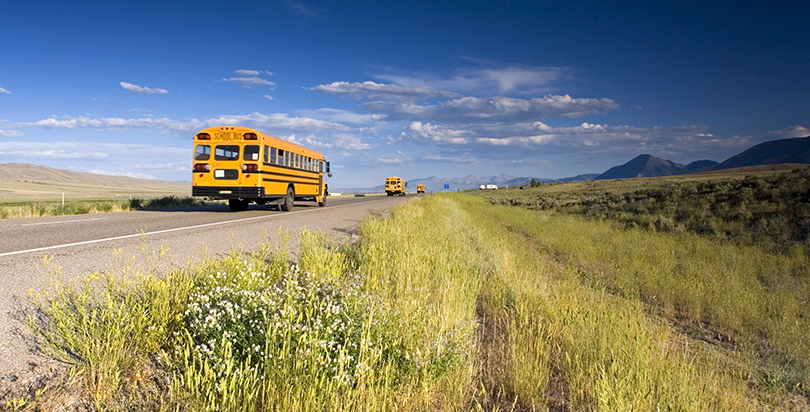
Due to primary schools not being able to prepare their students correctly, a lot of students either dropout of high school or graduate with their diplomas and do not continue with furthering their education. Only “29 percent of young adults (18 to 24 years old) in rural areas are enrolled in higher education” (Mowreader 2024). This is 19 percent lower than the enrollment rate in urban areas and 13 percent lower than the enrollment rate within suburban areas. This is because rural students face many more challenges that come with getting further education. These challenges include but are not limited to, affordability, college readiness programs, college recruitment, distance from colleges, and having a college-going mindset. Affordability becomes a problem when going to college because as stated previously, rural areas have the lowest household incomes as well as the highest poverty ratings across the nation. The average household income sits at about “$52,386” (Bishaw and Posey 2016) meanwhile, the average public college in states tuition is roughly $10,000 according to the Education Data Initiative. This number seems very low but to poor communities that number is a fifth of their entire salary which is why most parents hold negative perceptions about sending their children to college causing the student to have to pay on their own and unfortunately likely that they won’t. Becoming “college ready” also comes from the fact that due to the shortage of staff in schools within rural areas, most students are not being given the opportunity to see what a college class is like by taking AP courses or dual-enrollment classes. Sadly, some colleges tend to overlook applicants from rural areas due to the financial aid needed and the grades within their transcripts. The last and probably biggest pressing issue would be the distance from colleges. The last problem would be that “most college students attend an institution 25 miles away from their permanent address or closer, but rural students face postsecondary deserts, where there is no college or university within commuting distance,” (Mowreader 2024).
Strides Towards Improvement
Although the education system is currently in a deficit within rural areas there are currently strides being taken in improving the rural community. The biggest contribution would be that “the U.S. Department of Education announced the Biden-Harris administration will allocate $44.5 million in grants to 22 institutions to promote student success for rural learners” (Mowreader 2024). This means that all 44.5 million dollars will specifically help rural students to be set up for success across 22 different colleges across the nation. While this is amazing, the communities also want to see success in a higher enrollment rate from rural areas. Colleges can promote enrollment from rural communities by implementing summer programs that allow the college to partner with rural high schools allowing the students to see what life at college would look like. Some examples of this would include summer camps, potential internships, and campus visits. Other ways colleges can promote rural student enrollment are by offering more financial aid services, offering direct job skill training, making education more flexible, and even addressing transportation issues. In fact, from the Education Advisory Board, Sires states that “Virtual education and advising can significantly ease burdens for many rural students.” Sires also discusses how some institutions have started having professors meet their students in person within the community due to the lack of accessible transportation. Sires then continues to elaborate on how colleges can partner with local non-profits, and the Workforce Development Board to build relationships that mutually benefit both parties and allow for direct employment for college students.
Effects on Healthcare
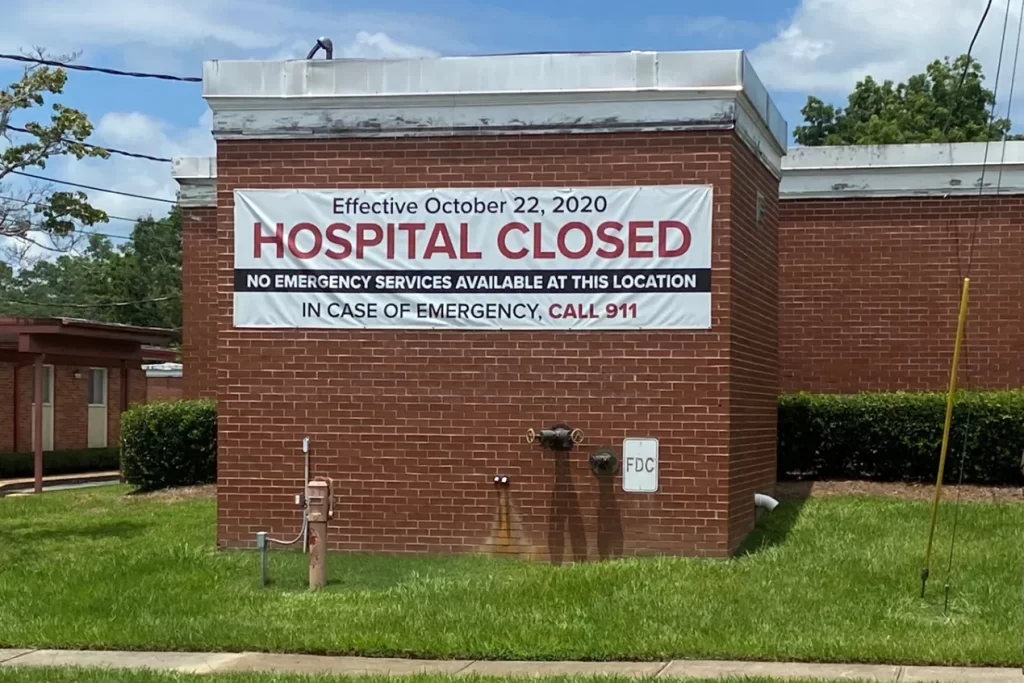
By improving the educational system within rural areas, the communities gain a better knowledge of the need for healthcare and also the importance of the roles within healthcare. In fact “more than 100 (or 4% of) rural hospitals closed from 2013 through 2020” (Handrup 2023). This was due to the lack of practicing physicians and the lack of funding as well. As the education within rural areas increases in quality, the residents will be able to gain an understanding of just how important medical care is; As well as being able to fulfill needed job positions to keep local access to healthcare. Rural area residents will also gain an understanding of just how many jobs within the healthcare system there are. Because there are not enough qualified personnel to fill these positions, hospitals are closing and making access to healthcare extremely difficult. In 2023, the distance rural residents have to drive to gain access to healthcare is 23.9 miles, compared to 3.4 miles in 2012 (Handrup 2023). Education plays a major role within the healthcare system by not only educating future employees but to spreading awareness to the residents within the communities about the importance of healthcare and the need for workers within.
The current education system within rural areas is currently improving and making strides to encourage college enrollment but healthcare is still on the decline. To allow for an increase in healthcare personnel within rural areas, once students go to clinical schools it can be required that a portion of the students practice within rural areas for at least a year. This was done in Australia and has shown great success. The Commonwealth Fund. explains how the Australian government opened and created 19 clinical schools requiring that at least a quarter of the population come from rural areas and also requires that a quarter of the student population practice in rural communities for at least a year. By implementing requirements within our healthcare education system and by placing other incentives like academic scholarships the number of doctors within rural areas will increase.
Recap
Overall the current education system is lacking within rural areas and does not provide students with accurate knowledge about college or jobs for future professions. This can be improved by implementing AP programs or dual-enrollment classes in the current high schools. Colleges can also promote rural resident enrollment by creating summer programs, increasing their financial aid, and even encouraging campus tours or visits. Due to the lack of educated individuals within the community, it puts a damper on the healthcare system and is causing access to healthcare within these rural areas to go extinct. This can also be improved by implementing work incentives at clinical programs like health workforce scholarships, increased health insurance benefits, and even creating requirements within the program to place physicians and doctors in those rural areas for a certain amount of time. By continuing to make strides in bettering rural areas education systems, as well as encouraging students to continue to further their education the current healthcare system will ultimately improve. Unfortunately, this will take time but within the next few years a better education system, healthcare system, and even the economy as a whole will improve due to having better educated individuals within the community.
Works citied
Dennon, Anne. “Rural Student College Attendance Takes a Dive | BestColleges.” BestColleges.com, 29 Jan. 2021, www.bestcolleges.com/blog/rural-students-college-enrollment-decline/.
Dumont, Andrew. “Changes in the U.S. Economy and Rural-Urban Employment Disparities.” Www.federalreserve.gov, 19 Jan. 2024, www.federalreserve.gov/econres/notes/feds-notes/changes-in-the-us-economy-and-rural-urban-employment-disparities-20240119.html.
Gunja, Munira. “Rural Americans Struggle with Medical Bills and Health Care Affordability.” Www.commonwealthfund.org, 24 July 2023, www.commonwealthfund.org/blog/2023/rural-americans-struggle-medical-bills-and-health-care-affordability.
Hanson, Melanie. “Average Cost of College by State.” EducationData, 9 Jan. 2022, educationdata.org/average-cost-of-college-by-state.
Hundrup, Alyssa . “Why Health Care Is Harder to Access in Rural America | U.S. GAO.” Www.gao.gov, 16 May 2023, www.gao.gov/blog/why-health-care-harder-access-rural-america#:~:text=In%20addition%20to%20losing%20their.
Miller, Portia, et al. “Poverty and Academic Achievement across the Urban to Rural Landscape: Associations with Community Resources and Stressors.” RSF: The Russell Sage Foundation Journal of the Social Sciences, vol. 5, no. 2, 2019, p. 106, www.rsfjournal.org/content/5/2/106, https://doi.org/10.7758/rsf.2019.5.2.06.
Morrissey, Taryn W., et al. “Family Income, School Attendance, and Academic Achievement in Elementary School.” Developmental Psychology, vol. 50, no. 3, 2014, pp. 741–753, https://doi.org/10.1037/a0033848. Accessed 5 Aug. 2019.
Mowreader, Ashley. “Report: 4 Ways to Promote Rural College Student Enrollment, Completion.” Inside Higher Ed, 16 Jan. 2024, www.insidehighered.com/news/student-success/academic-life/2024/01/16/four-challenges-rural-college-completion-persistence.
National Center for Education Statistics. “COE – Enrollment and School Choice in Rural Areas.” Nces.ed.gov, nces.ed.gov/programs/coe/indicator/lcb/school-choice-rural?tid=1000.
Postsecondary National Policy Institute Rural Students in Higher Education CENSUS OVERVIEW. Feb. 2024.
Rural Health Information Hub. “Healthcare Access in Rural Communities.” Rural Health Information Hub, 2021, www.ruralhealthinfo.org/topics/healthcare-access.
Sires, Earl. “5 Ways to Support Rural Student Success | EAB.” Eab.com, 7 Apr. 2022, eab.com/resources/blog/community-college-blog/rural-student-success/. Accessed 22 Mar. 2024.
Tulane University. “How to Improve Health Care in Rural Areas.” Publichealth.tulane.edu, 17 Jan. 2023, publichealth.tulane.edu/blog/how-to-improve-health-care-in-rural-areas/.
US Census Bureau. “A Comparison of Rural and Urban America: Household Income and Poverty.” The United States Census Bureau, 22 Dec. 2016, www.census.gov/newsroom/blogs/random-samplings/2016/12/a_comparison_of_rura.html.